![Auto repair shop specializing in reliable car services in [Location].](https://spcdn.shortpixel.ai/spio/ret_img,q_cdnize/thesimpleautoshop.com/wp-content/uploads/2021/10/logo_the_simple_vf-removebg-preview-1.png)
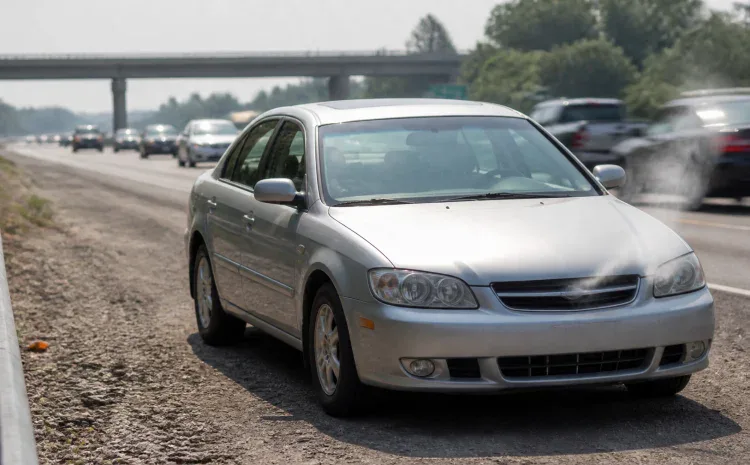
Engine Overheating in Richmond Traffic? Here’s What to Do Before You Blow a Gasket
Richmond summers don’t play around. When the humidity hits 90% and the temperature climbs past 100 degrees, your car isn’t just a transport vessel: it’s an ecosystem working overtime to stay alive. If you’ve ever been stuck in stop-and-go traffic on I-95 or crawling down Broad Street during rush hour, you know that the heat coming off the asphalt is a different beast entirely.
In these conditions, your engine’s cooling system is under immense pressure. It takes just a small crack in a hose or a slight drop in coolant for that temperature gauge to start its slow, terrifying march toward the red zone.
At The Simple Auto Shop, we believe in straightforward help, not high-pressure sales. If you find yourself in a situation where your car is running hot, you don’t need a gimmick; you need a plan. This guide is designed to keep you calm, keep you safe, and save you from the massive repair bills that come with a blown head gasket or a warped engine block.
Phase 1: Recognizing the Warning Signs
Most drivers don’t realize their engine is overheating until they see white clouds pouring from the hood. By then, the damage might already be done. To be a prepared driver in Richmond, you need to “listen” to your car through your senses.
The Gauge Spike
Your temperature gauge usually sits right in the middle once the car is warmed up. In a heatwave, keep a close eye on it. If it moves past the center or begins flirting with the “H” (Hot) or the red line, your cooling system is losing the battle. This is your first warning. Don’t wait for it to peg out; once it moves significantly higher than normal, it’s time to act.
The Syrupy Smell
Coolant has a very distinct, sickly-sweet smell. If you’re sitting at a light on Broad Street and suddenly smell something like maple syrup or burnt sugar, you likely have a coolant leak. Even a small pinhole leak can depressurize your system, causing the engine to boil over almost instantly.
The “Thumping” or “Tapping” Sound
When an engine gets too hot, the oil begins to thin out and lose its ability to lubricate. You might hear a metallic tapping or a deep thumping sound. This is the sound of metal components losing their protective film. If you hear this, you are seconds away from major mechanical failure.

Phase 2: The “Emergency” Cooling Trick
If you are stuck in a lane where you can’t immediately pull over: like the middle of the Lee Bridge or a tight construction zone on I-95: there is one trick you can use to buy yourself a few extra minutes.
Turn the Air Conditioning OFF and the Heat ON.
It sounds counterintuitive. Why would you want 100-degree air blowing in your face when it’s already 100 degrees outside? Because your car’s heater is essentially a secondary radiator. By turning the heater to full blast, you are drawing excess heat away from the engine block and into the cabin. It’s going to be uncomfortable for you, but it might save your engine from melting. Open all the windows and bear with it until you can reach a safe spot.
Phase 3: Pulling Over Safely
Once you see steam or the gauge hits the red, you need to get off the road. Continuing to drive “just a few more miles” is how a $200 auto repair Richmond VA turns into a $5,000 engine replacement.
- Find a Hard Surface: Aim for a flat, paved shoulder or a parking lot. Avoid tall, dry grass; your exhaust system is extremely hot and could start a brush fire.
- Nose Into the Wind: If possible, park facing into any breeze to help circulate air through the engine bay.
- Hazard Lights: Turn them on immediately. Richmond traffic is distracted; make sure you are visible.
- Shut Down: Once stopped, turn the engine off immediately. Do not leave it idling to “cool down”: idling without airflow from driving will only make it hotter.
Phase 4: The 15-Minute Rule
This is the most important piece of advice in this article: Do not touch the hood for at least 15 minutes.
When an engine overheats, the coolant is under incredible pressure and can reach temperatures well over 240 degrees. If you pop the hood immediately, you risk a face full of scalding steam. Worse, if you try to open the radiator cap, you could cause a “geyser” of boiling fluid that will lead to severe burns.
While you wait for things to settle, this is the perfect time to call for help. At The Simple Auto Shop, we provide a complimentary 24-hour roadside assistance program for our customers. This includes towing and fluid delivery. If you’re stranded, you don’t have to guess what to do next. We’ll get you and your car to safety without the stress.

Phase 5: Assessing the Damage (Without the Upsell)
Once the engine is cool to the touch, you can visually inspect the situation. Look for:
- Puddles: Is there green, orange, or pink fluid dripping onto the pavement?
- Burst Hoses: Look for hoses that appear swollen, collapsed, or disconnected.
- The Radiator Cap: Check for crusty white or green residue around the cap, which indicates a failed seal.
At this point, even if you manage to add water and the gauge stays down, you still need a professional car mechanic Richmond VA. An overheat event is a symptom of a larger problem: usually a failing water pump, a stuck thermostat, or a radiator blockage. Driving on a compromised system is like walking on a broken ankle; it’s only a matter of time before it gives out again.
Why The Simple Auto Shop is Different
We know that being stranded is vulnerable. Many shops take advantage of that urgency to sell you things you don’t need. We built our reputation on doing the opposite.
When you bring an overheated car to us, we perform a comprehensive engine diagnostic to pinpoint the exact failure. We won’t suggest a whole new radiator if you just need a $15 thermostat. We won’t suggest a new engine if we can save yours with a simple flush and seal.
We stand behind our work with a 2 Year/24,000 mile nationwide warranty. Whether you’re driving through Richmond or road-tripping to another state, you can drive with confidence knowing your repair was done right the first time.

Prevention: The Best Roadside Strategy
You don’t have to wait for the steam to find out your car is in trouble. Most overheating issues are preventable through regular oil changes and maintenance. During a standard service, our team checks your coolant levels, hose integrity, and belt tension. We look for the “pre-symptoms” of a summer breakdown so you can avoid the 1-95 shoulder altogether.
If your car is more than five years old and has never had a coolant flush, the fluid inside has likely become acidic. This acid eats away at your radiator and water pump from the inside out. A simple A/C and heating service or a cooling system refresh is a small investment compared to the cost of a towed vehicle and an emergency repair.
Don’t Gamble With the Heat
The Richmond heat is relentless, but your car can handle it if the system is maintained. If you’re worried about how your vehicle is performing in this traffic, or if you’ve noticed the needle creeping up, don’t wait.
No shortcuts. Zero room for error. Just dependable, honest work from a team that takes pride in their craft.
Stop by The Simple Auto Shop or contact us today for a straightforward assessment. Let’s make sure you stay on the road: not on the shoulder.
